

Chapter 3 – NOAA Operations – NOAA Fleet
NOAA owns and operates a wide variety of specialized aircraft and ships that play an integral part in achieving its environmental and scientific missions. At present, the active NOAA fleet includes nine aircraft and 16 ships, operated by OMAO.
Formulation of policies and procedures, development of plans and budgets, and execution of annual allocation plans are conducted by OMAO personnel primarily located in Silver Spring, Maryland, and Tampa, Florida. Details of the capabilities and organization of OMAO and NOAA’s Aircraft Operation Center are available at www.omao.noaa.gov and www.aoc.noaa.gov.
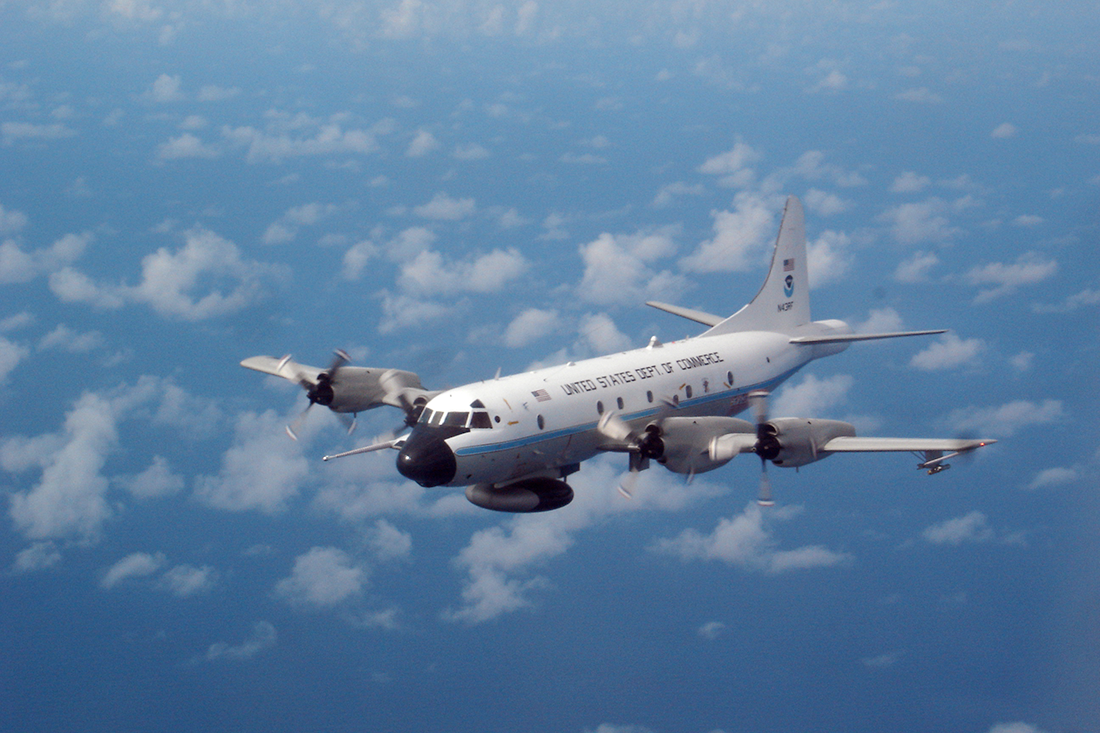 Figure 3-2 NOAA WP-3D Hurricane Hunter
NOAA’s aircraft fleet provides unique, specialized platforms for the collection of a wide range of airborne data. The aircraft collect environmental and geographic data essential to hurricane and other weather and atmospheric research, provide aerial support for coastal and aeronautical charting and remote sensing projects, conduct aerial surveys for hydrologic research that helps predict flooding potential from snowmelt, and provide support to fisheries research and marine mammal assessment programs.
The first hurricane aircraft was acquired by the U.S. Weather Bureau in 1961 to support its National Hurricane Research Project. Since the establishment of NOAA in 1970, NOAA has upgraded and maintained aircraft systems to serve the agency’s requirements for ocean, atmospheric, and earth surface observations. Currently, the active fleet includes nine aircraft of five different model types.
NOAA’s aircraft operate throughout the United States and around the world, over open oceans, mountains, coastal wetlands, and Arctic pack ice. The versatile aircraft are uniquely modified and instrumented to provide scientists with airborne platforms necessary to collect the environmental and geographic data to support essential NOAA products, services, and research.
NOAA’s aircraft operations are supported by a combination of personnel systems, including Federal civilian employees and officers of the NOAA Corps, NOAA’s uniformed service. NOAA Corps officers also support the mission and goals of NOAA’s diverse programs through rotational assignments, which bring operational flight duty expertise to the programs and a programmatic expertise to operational flight duty. www.aoc.noaa.gov/aircraft.htm
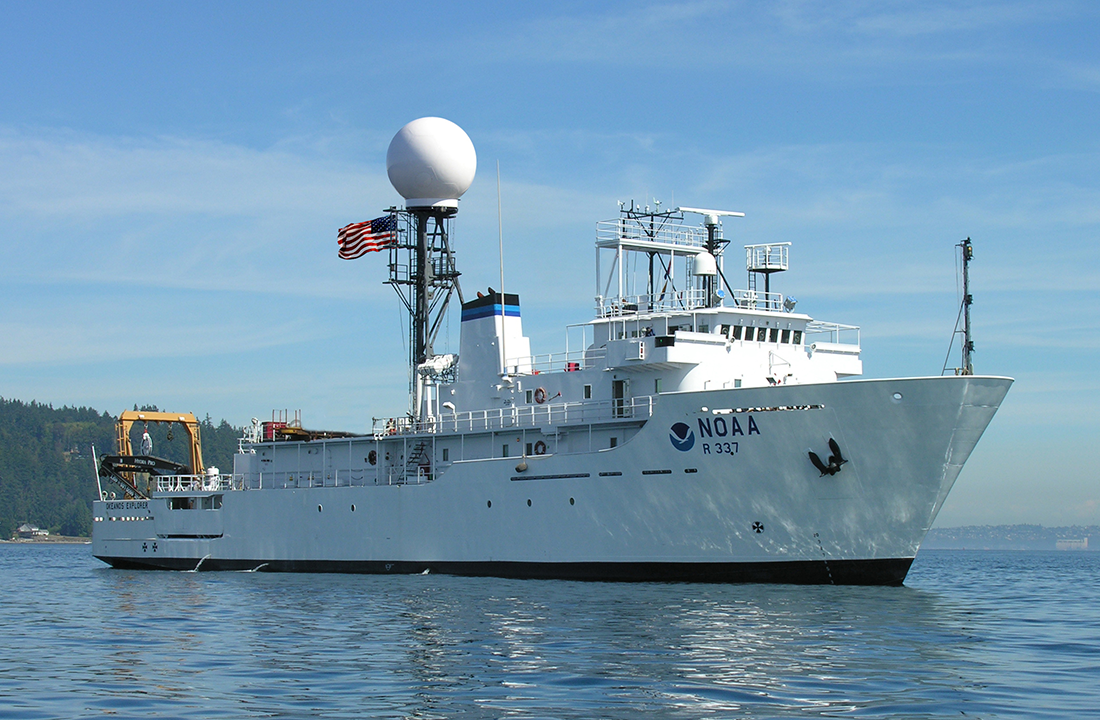
Marine Operation and Maintenance Program
NOAA’s ship fleet provides seagoing platforms for hydrographic surveys, oceanographic and atmospheric research, and fisheries research. Ships have been, and will continue to be, a primary source of observation data, providing in situ measurements of physical and biological oceanography, and supporting NOAA’s information and ecosystem management services. NOAA ships also help develop and maintain other ocean and atmospheric observation platforms, such as buoys, autonomous undersea vehicles, and unmanned aircraft systems.
Most of NOAA’s oldest ships were built in the 1960s for NOS or NMFS. The current NOAA fleet consists of 16 research vessels, and NOAA has successfully developed, adapted, and/or fielded a number of technologies to enhance the capabilities of the ships.
NOAA ships are run by a combination of NOAA Commissioned Officers and wage marine civilians. The wage marine personnel include licensed masters, mates and engineers, and unlicensed members of the engine, steward, and deck departments.
In addition, survey and electronic technicians operate and/or maintain the ships’ mission, communication, and navigation equipment. The ships’ officers and crew provide mission support and assistance to embarked scientists from various NOAA laboratories as well as the academic community. www.moc.noaa.gov
NOAA’s ships and aircraft face challenges similar to other observational infrastructure—expanding mission requirements, age and obsolescence, and finite resources for recapitalization.
To address these issues, NOAA developed the NOAA Fleet Composition: 2012-2027 report, which supplements the FY 2010 to FY 2024 NOAA Ship Recapitalization Plan. This plan provides a comprehensive review of at-sea observation and operational requirements, assesses current capabilities and capacities, and provides a plan to ensure the sustainability of vital at-sea data collection capabilities. Ship Allocation Plans
To address similar challenges of aircraft, NOAA is developing an aircraft recapitalization plan. This plan provides a comprehensive review of airborne observation and operational requirements, assesses current NOAA airborne data collection capabilities and capacities, and provides a plan to ensure the sustainability of a vital airborne data collection capability. Implementation of these plans will promote both economic and societal benefits for the Nation. Aircraft Allocation Plans
More information about NOAA’s Fleet is available at www.omao.noaa.gov/fleet.html.


